There is something especially satisfying about making one little beauty product that can do two jobs.
A tinted lip and cheek balm adds a soft wash of colour to the lips while doubling as a creamy blush. The trick is finding the right texture: slightly firmer than a traditional lip balm so it doesn’t feel greasy on the cheeks, but still creamy enough to melt easily into the skin.
I’m starting with a very simple version using ingredients that are easy to find. Then we’ll take a little inspiration from the beauty rituals of Jane Austen’s time before finishing with the richer botanical version I make with some of my favourite skincare oils.
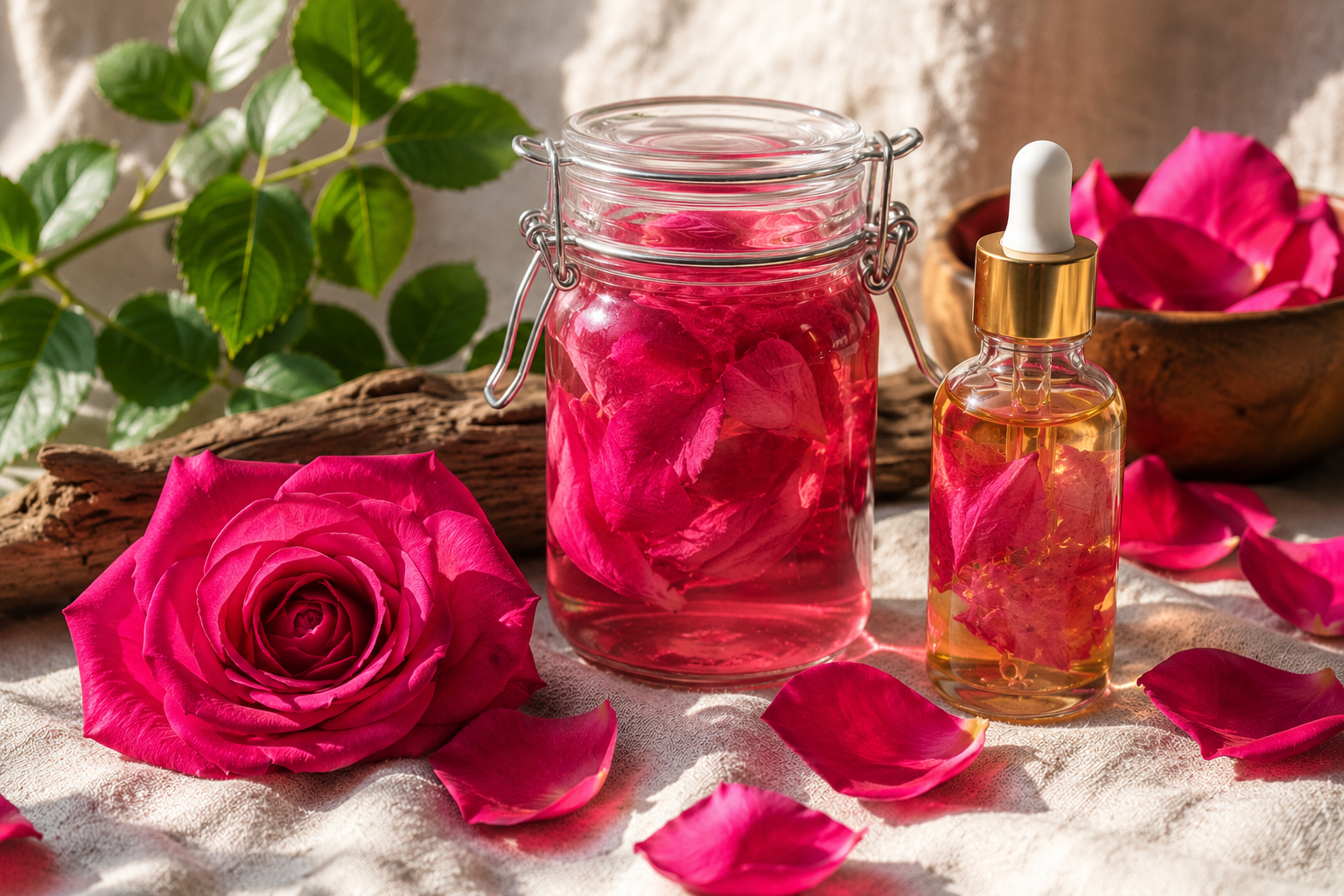
If you enjoy making your own botanical beauty products, you might also like my Simple Homemade Face Toner, Homemade Rose Water & Rose-Infused Oil and 8 Ways to Use Roses. I love finding ways to turn the roses and botanicals from the garden into simple things I can actually use.

Simple Tinted Lip & Cheek Balm
This is the version I’d recommend starting with. You only need an oil, beeswax and your chosen colour.
Makes About 10 × 5 mL Containers
Ingredients
- 6½ tsp sweet almond oil
or use homemade rose-infused oil - 2½ tsp beeswax pellets
- 2–4 tsp lip-safe cosmetic mica
- 10 drops vitamin E, optional
Directions
1. Melt the beeswax and oil gently in a double boiler.
2. Remove from the heat and gradually stir in your colour, starting with a very small amount. Mix thoroughly.
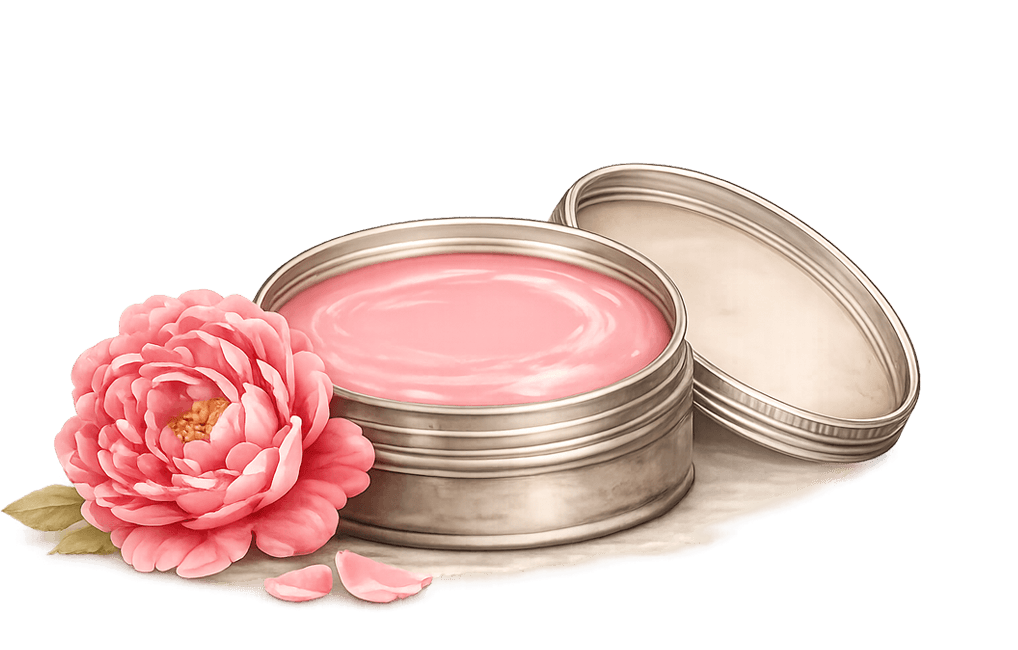
3. Pour into a small cosmetic balm tin or glass jar .
How to Use
For lips, apply it just as you would a regular tinted balm.
For cheeks, warm a tiny amount between your fingertips, tap it onto the apples of your cheeks and blend outward. Start with very little—you can always build the colour.
Make It with Roses From Your Garden
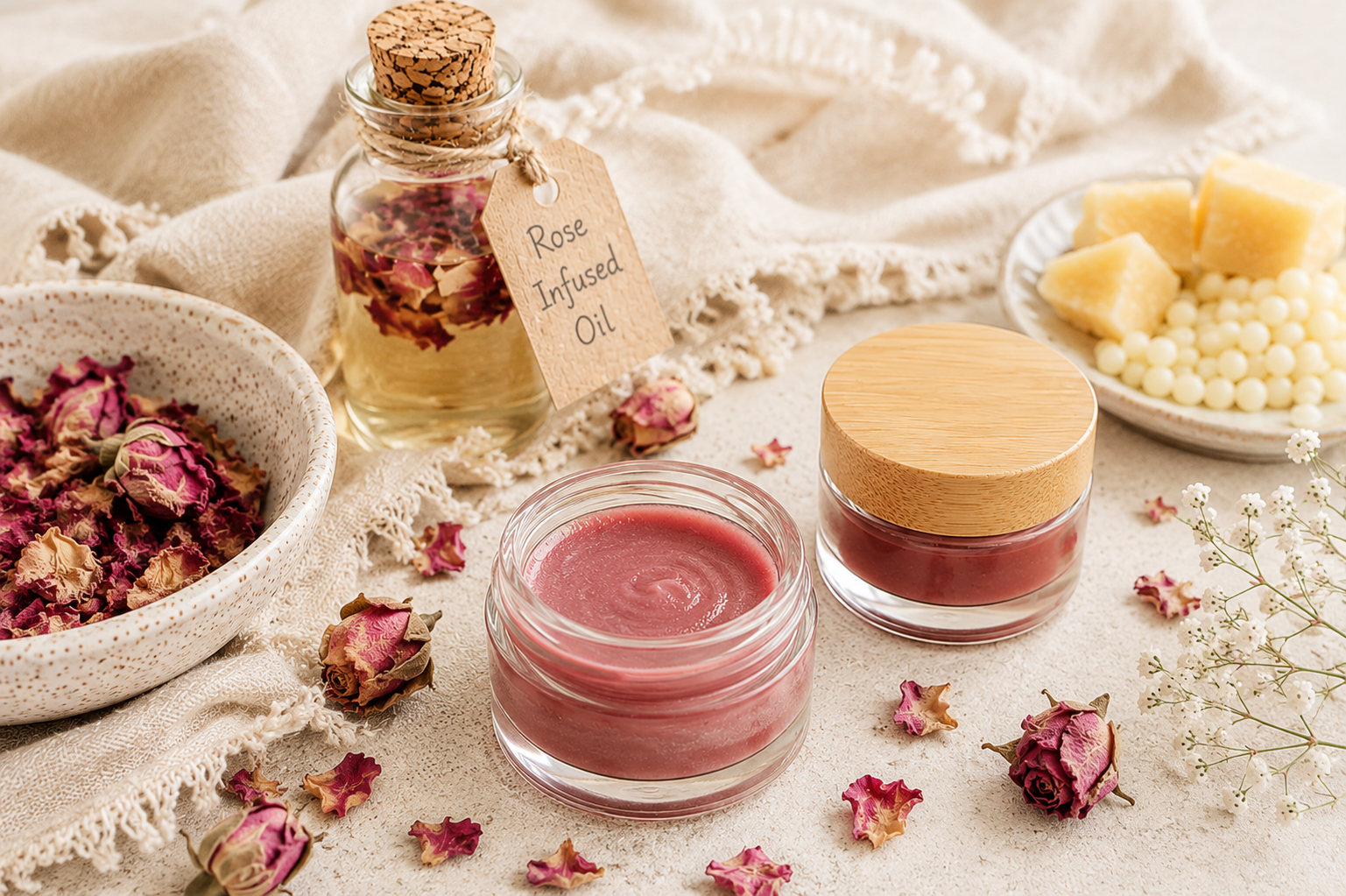
One of my favourite ways to make this simple recipe more special is to replace the plain sweet almond oil with homemade rose-infused oil.
If you have roses growing in your garden, follow my Homemade Rose Water & Rose-Infused Oil recipe to make your own botanical oil first. It’s also one of the ideas in my 8 Ways to Use Roses, where I’ve collected some of my favourite ways to use garden roses beyond simply enjoying them in a vase.
A Jane Austen–Inspired Lip & Cheek Balm
Women in Jane Austen’s time certainly didn’t have modern lip-and-cheek sticks, but naturally tinted salves, pomades and cosmetic preparations made from waxes, oils and botanical ingredients have a much longer history than our modern makeup bags.
For this version, I wanted to keep things deliberately simple and botanical, taking inspiration from the old-fashioned beauty preparations of the period rather than trying to turn it into a modern cosmetic formula.
Ingredients
- 6½ tsp rose-infused sweet almond oil
- 2½ tsp beeswax pellets
- 2–4 tsp lip-safe rose, berry or red cosmetic pigment
Directions
- Gently melt the rose-infused oil and beeswax together.
- Remove from the heat and add just enough pigment to create a delicate rosy tint.
- Mix thoroughly and pour into a small balm container.
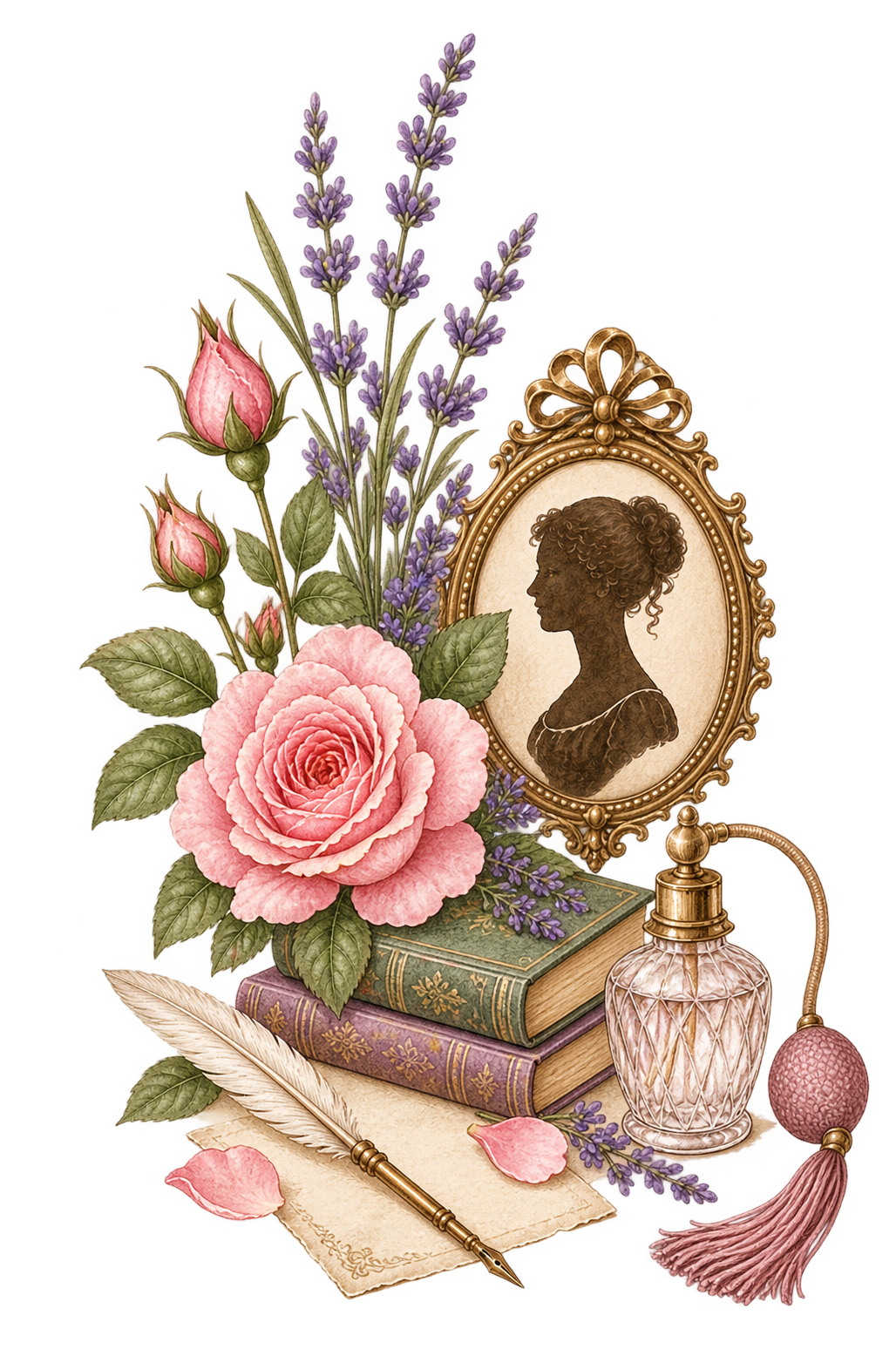
A Soft Rosy Flush
Keep the colour delicate rather than lipstick-dark. Apply a small amount to the lips, then tap a little onto the cheeks and blend with your fingertips for a soft, just-pinched rosy glow.
Inspired by the period — not an original Jane Austen recipe.
Women in Jane Austen’s time didn’t have modern lip-and-cheek sticks, but simple beauty preparations made with waxes, oils and botanicals have a much longer history.
Makes approximately 10 small 5 mL containers.
If you enjoy this little glimpse into historical beauty, you can also visit my Jane Austen-Inspired Perfume / DIY Perfume post, where I created a romantic botanical fragrance inspired by English gardens and the scents of her time.

My Advanced Botanical Lip & Cheek Balm
Once you become comfortable making your own beauty products, the fun really starts.
Over the years I’ve accumulated quite a collection of botanical oils, so this is the version where I can use some of my favourites and make something considerably richer than the beginner balm.
Ingredients
- 13 mL pomegranate seed oil
- 13 mL jojoba oil
- 6.5 mL rosehip oil
- 6.5 mL argan oil
- 15 g beeswax pellets
- 2-4 tsp lip-safe cosmetic pigment
- 10-12 drops vitamin E
Why These Oils?
Pomegranate seed oil gives the balm a wonderfully rich botanical base.
Jojoba oil has a lighter, less greasy feel, which is particularly useful when we’re making something that needs to work on the cheeks as well as the lips.
Rosehip and argan oils add richness and turn this into a much more luxurious version of the simple balm.
The slightly higher proportion of beeswax helps the balm stay where you put it on the cheeks, while the botanical oils keep it creamy enough for the lips.
Directions
Gently melt the beeswax with the jojoba oil.
Remove from the heat and stir in the pomegranate, rosehip and argan oils. Add your pigment gradually and mix very thoroughly until the colour is completely dispersed.
Stir in the vitamin E once the mixture has begun to cool slightly, then pour into a clean balm pot and allow it to set.
Adjusting the Texture
One of the advantages of making your own balm is that you don’t have to accept a texture you don’t love.
If your finished balm feels too dry or waxy, remelt it and add a little more liquid oil.
If it’s too soft or greasy for the cheeks, remelt it with a small additional amount of beeswax.
The ideal lip-and-cheek balm should soften quickly when you touch it, glide comfortably over the lips and blend easily into the cheeks without leaving them looking overly oily.
Create Your Own Botanical Beauty Routine
This lip and cheek balm is only one of the botanical beauty recipes I’ve been making and experimenting with at Marina’s Garden.
If you’d like to continue, try my Simple Homemade Face Toner after cleansing, learn How I Make Rose Water & Rose-Infused Oil, explore 8 Ways to Use Roses, or experiment with my DIY Botanical Perfumes.
I love that many of the same ingredients can move from one recipe to another. Rose-infused oil can become a lip balm, botanical waters can become a face toner, and essential oils and flowers can inspire a completely different homemade perfume. Once you start building a small collection of ingredients, making your own beauty products becomes much easier—and much more creative.

More DIY Beauty from Marina’s Garden:
Homemade Face Toner • Rose Water & Rose-Infused Oil • 8 Ways to Use Roses • DIY Perfumes