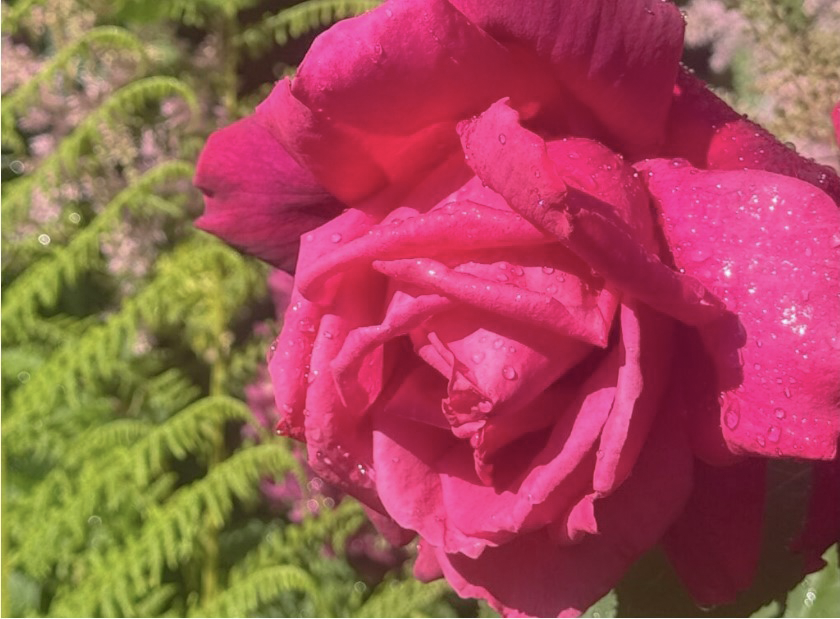
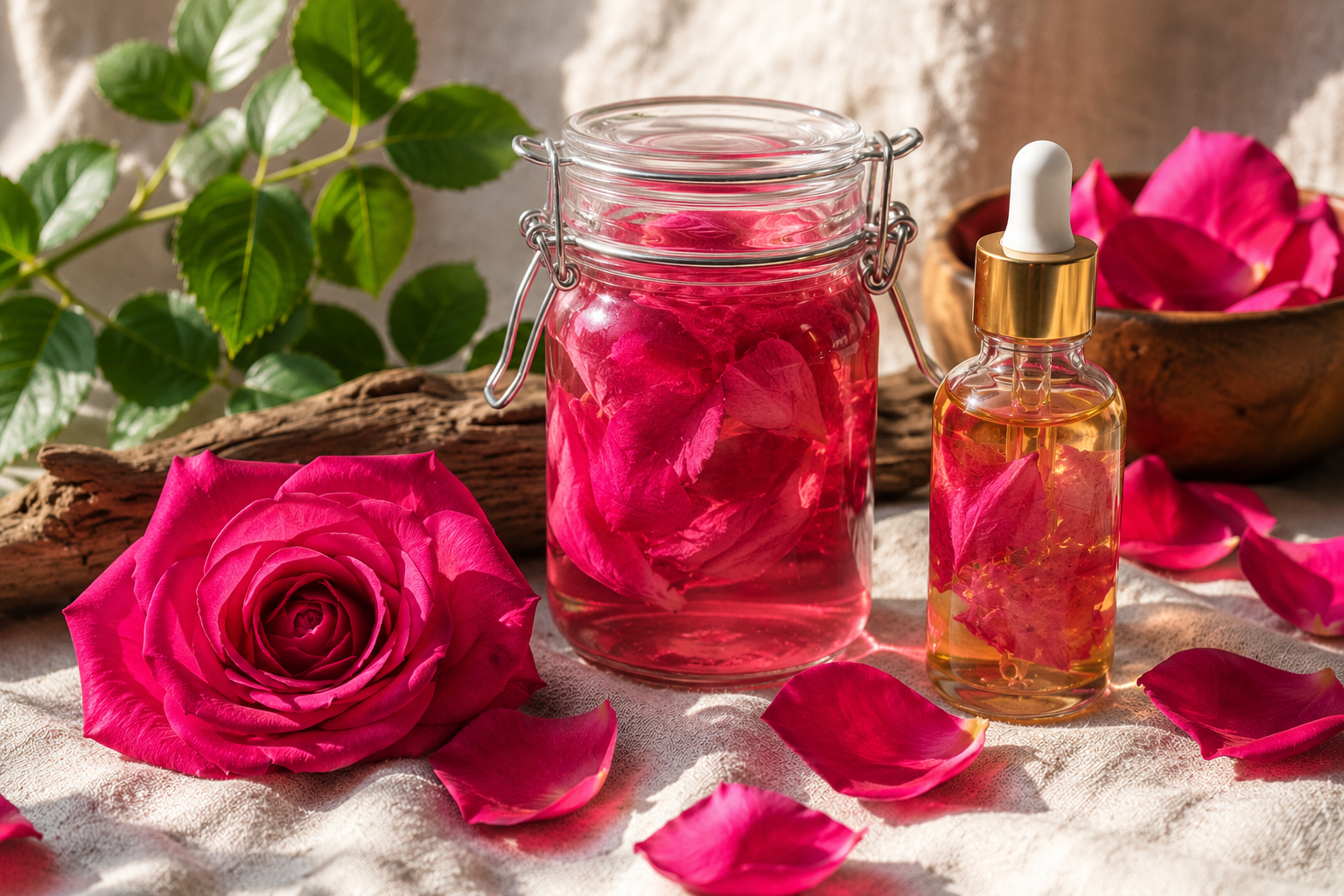
Fresh garden roses are too beautiful to enjoy for only a few days, so every summer I like to preserve their fragrance in different ways. This year, I experimented with two methods of making rose water—a gentle hot water infusion and a slow simmering method—and I also made a simple rose-infused jojoba oil.

Although all three recipes begin with freshly harvested rose petals, each produces a slightly different result. The hot infusion creates a delicate floral water, the simmering method produces a deeper colour and stronger fragrance, while the rose-infused oil captures the scent of the garden in a nourishing carrier oil that can be used in many homemade beauty recipes.
In this guide, I’ll show you exactly how I make each one, explain the differences I noticed, and share how I use them throughout the year.
Which Method Should You Choose?
Each recipe has its own purpose, and I now keep all three on hand.

Hot Water Infusion
This method is similar to preparing a herbal infusion. Fresh rose petals are covered with hot distilled water, then allowed to steep slowly while covered.
Best for:
- Facial mist
- Gentle facial toner
- Linen spray
- Botanical skincare recipes
Short on time? Alteya Organics Bulgarian Rose Water is a wonderful ready made alternative
Gentle Simmering
The simmering method extracts more colour and usually produces a stronger floral fragrance. Keeping the pot covered helps retain the delicate rose aroma during the process.
Best for:
- Facial toner
- Homemade face masks
- Bath products
- DIY botanical beauty recipes

Rose-Infused Jojoba Oil
Rose-infused oil has a completely different purpose. Instead of extracting water-soluble compounds, the petals slowly infuse their fragrance into jojoba oil, creating a beautiful base for lip balms, body oils, massage oils, and other natural skincare recipes.

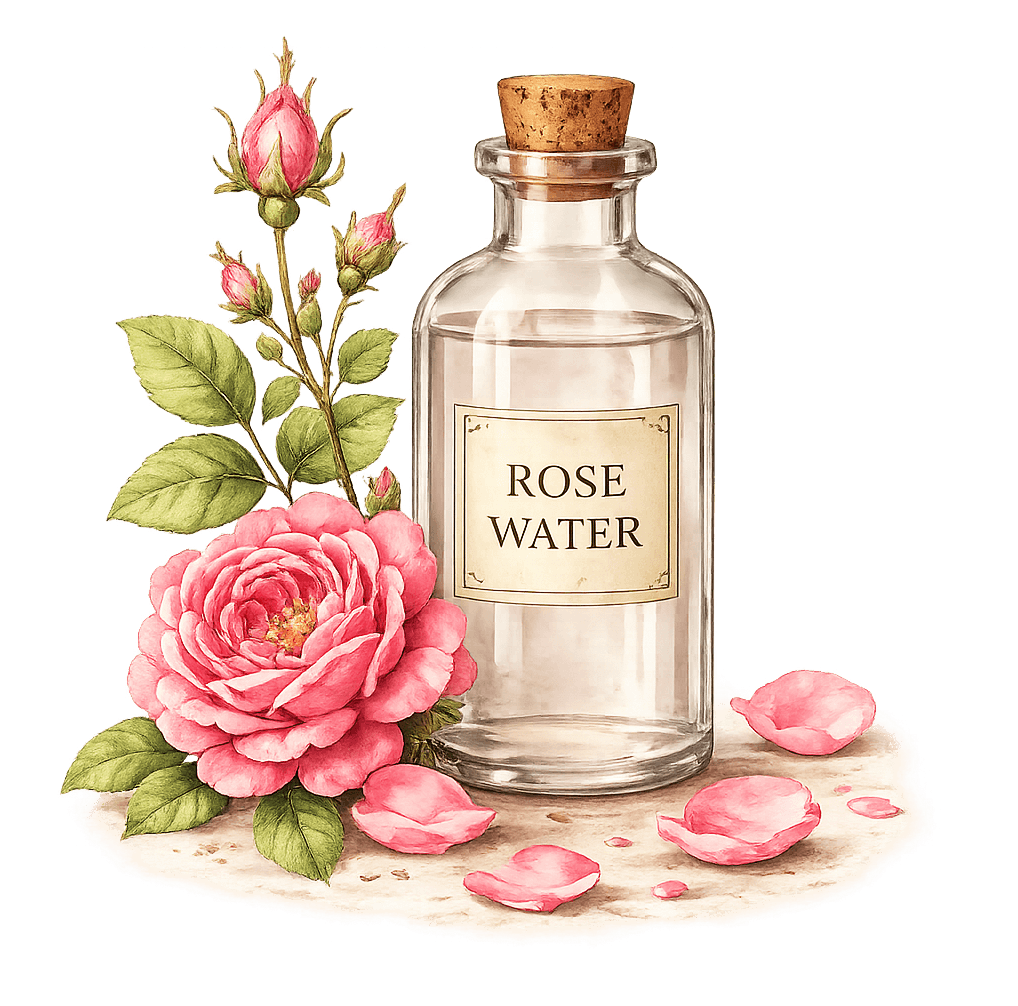
Method 1 – Hot Water Rose Infusion
You’ll Need
- Fresh fragrant garden roses (or dried petals)
- Distilled water
- Heat proof glass jar or bowl
- Fine mesh strainer or cheesecloth
- Glass bottle for storage
How I Make It
- Harvest fresh roses early in the morning.
- Remove the petals and gently rinse if needed.
- Bring distilled water almost to a boil.
- Pour the hot water over the rose petals.
- Cover immediately with a lid or plate to trap the fragrant steam.
- Allow the petals to infuse for 24–48 hours.
- Strain through a fine mesh strainer or cheesecloth.
- Bottle and refrigerate.
Alteya Organics Rose Water is a wonderful ready-made alternative.
Method 2 – Simmered Rose Water
You’ll Need
- Fresh rose petals
- Distilled water
- Small saucepan with a lid
- Fine mesh strainer
- Glass bottle
How I Make It
- Place fresh rose petals into a saucepan.
- Add distilled water to cover the petals.
- Cover the pot with a lid.
- Simmer very gently over low heat.
- Continue until the petals become pale.
- Allow everything to cool before removing the lid.
- Strain the liquid.
- Bottle and refrigerate.
Alteya Organics Rose Water is a wonderful ready-made alternative.

Method 3 – Rose-Infused Jojoba Oil

You’ll Need
- Fresh rose petals
- Jojoba oil
- Clean glass jar
- Fine mesh strainer
- Glass bottle
How I Make It
- Allow freshly picked petals to air-dry for several hours to reduce surface moisture.
- Fill a clean glass jar loosely with the petals.
- Cover completely with jojoba oil.
- Seal the jar.
- Allow the petals to infuse for 2–4 weeks, gently swirling the jar every few days.
- Strain through cheesecloth or a fine mesh strainer.
- Bottle and store in a cool, dark place.
Ways I Use Them
- Homemade facial toner
- Facial mist
- Rose-infused body oil
- Rose lip balm
- Bath soaks
- Botanical skincare
- Handmade gifts
Related From Beauty Garden
🌹 8 Ways I Use Roses From My Garden
🌹 DIY Rose Toner (coming soon)
🌹 Rose Lip Balm (coming soon)