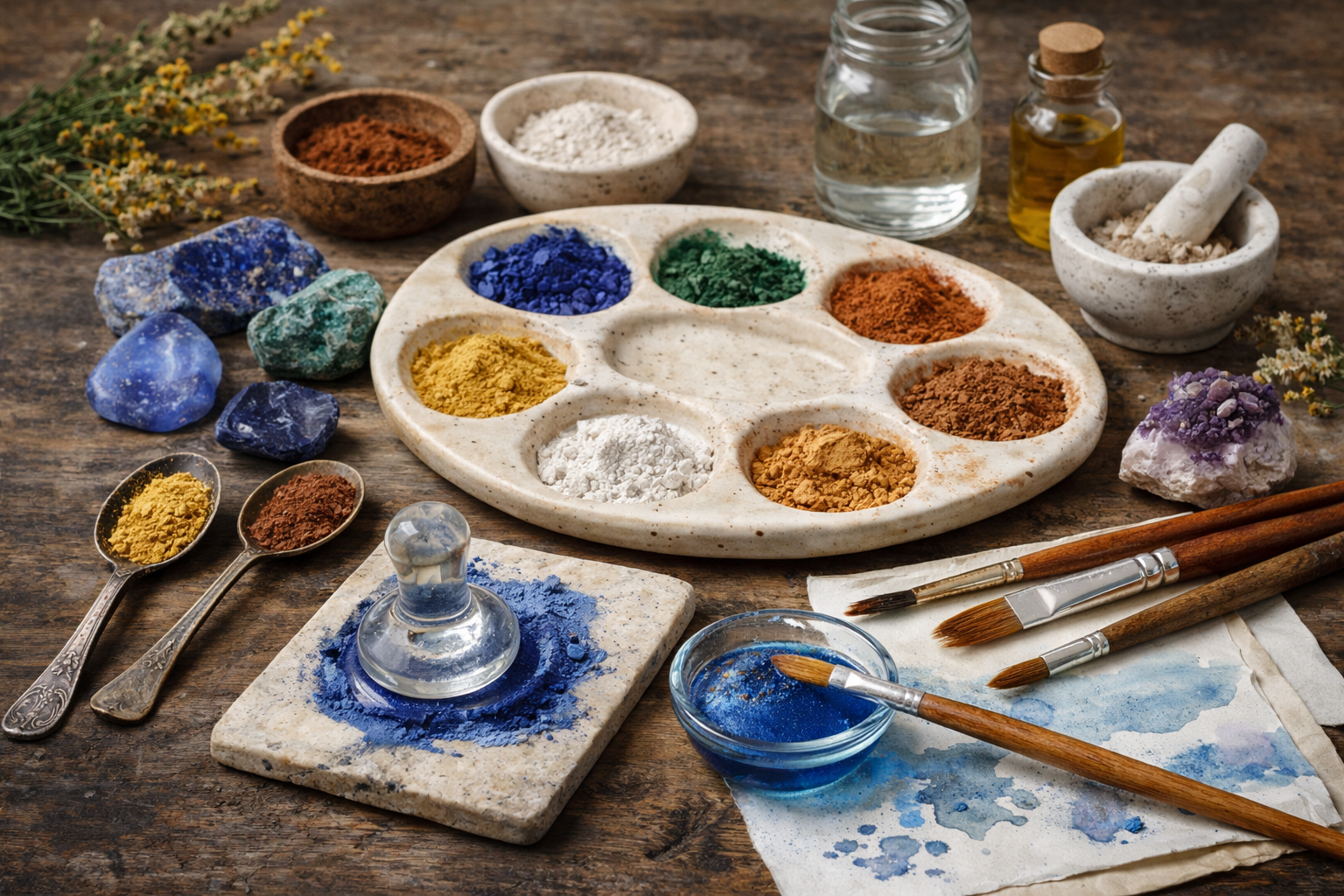
I’ve been moving toward a more intentional way of painting — using real earth and mineral pigments instead of conventional paints.
At first, it felt like a small shift, but it changed the whole process.
This approach feels more grounded and more aligned with the kind of work I want to create.
The colors don’t feel artificial. They move, settle, and interact with water in a way that feels natural and slightly unpredictable.
It’s slower, but much more connected.
This is part of my Art Garden.
Why Natural Pigments?
Natural pigments come directly from:
- earth
- minerals
- stone
They’ve been used for thousands of years, long before modern paints.
What I notice most is how they behave:
- soft, layered color
- subtle variation
- natural movement in water
They don’t try to be perfect — and that’s exactly why they work.
Chakras, Colors & Pigments
I’ve started organizing my palette in a simple way:
Root Chakra
Venetian Red
Sacral Chakra
Venetian Red + Yellow Burgundy Ochre
Solar Plexus
Yellow Burgundy Ochre
Heart Chakra
Bohemian Green Earth (genuine)
Throat Chakra
Azurite (main blue)
Optional: Lapis for smoother washes
Third Eye
Azurite + Venetian Red
Crown Chakra
Iron Glimmer Violet
Soul Star Chakra
Very diluted Lapis, soft shimmer, or minimal pigment
My Current Kremer Palette
This is the core set I’m working with:
- Azurite natural, fine – pigment powder
- Lapis Lazuli from Chile – watercolor
- Yellow Burgundy Ochre – watercolor
- Venetian Red – watercolor
- Iron Glimmer Violet – watercolor
- Van Dyck Brown – watercolor
- Bohemian Green Earth (genuine) – watercolor
Optional additions
- Mica flakes – soft shimmer
- Rosenoble Gold Powder – subtle highlights
- Painter’s Gold – stronger accents
These are optional — I’m mostly focusing on keeping everything earth and mineral-based.
Alternative Natural Option
Another direction I’m exploring is using raw mineral pigments from NaturalPigments.ca.
Some options:
- Lapis Lazuli pigment
- Armenian pigment sampler
These are true mineral pigments and closer to traditional painting methods.
They require a bit more preparation, but feel very authentic.
What You Need
For ready-made paints:
- water
- brushes
- watercolor paper
For pigment powders:
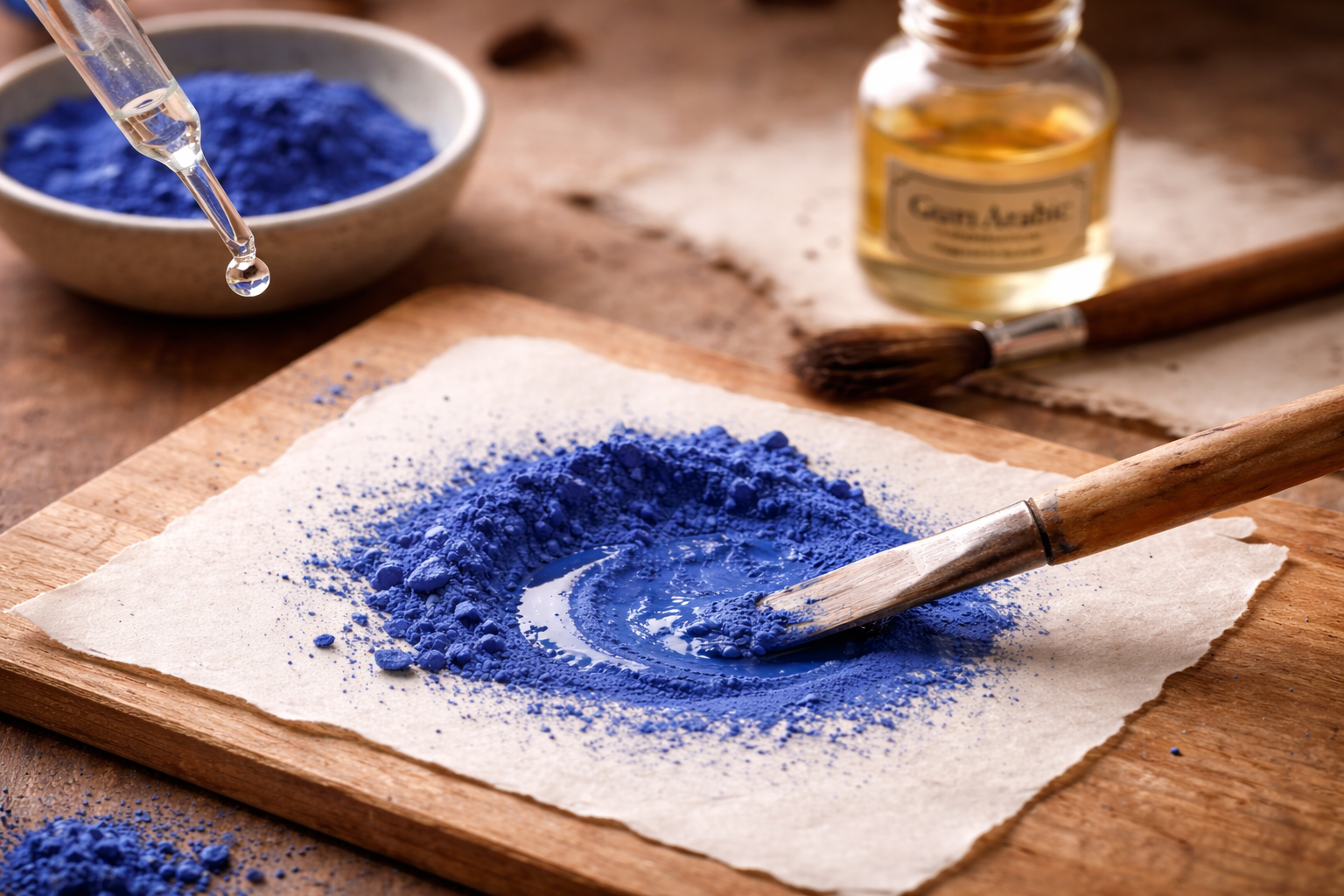
- gum arabic (liquid)
- water
- optional: a drop of honey or glycerin
Simple Pigment Mixing
The process is simple:
- Place a small amount of pigment
- Add a few drops of gum arabic
- Add water
- Mix until smooth
I also wrote a simple guide on how to mix pigment into watercolor paint step-by-step.
Technique I’m Exploring
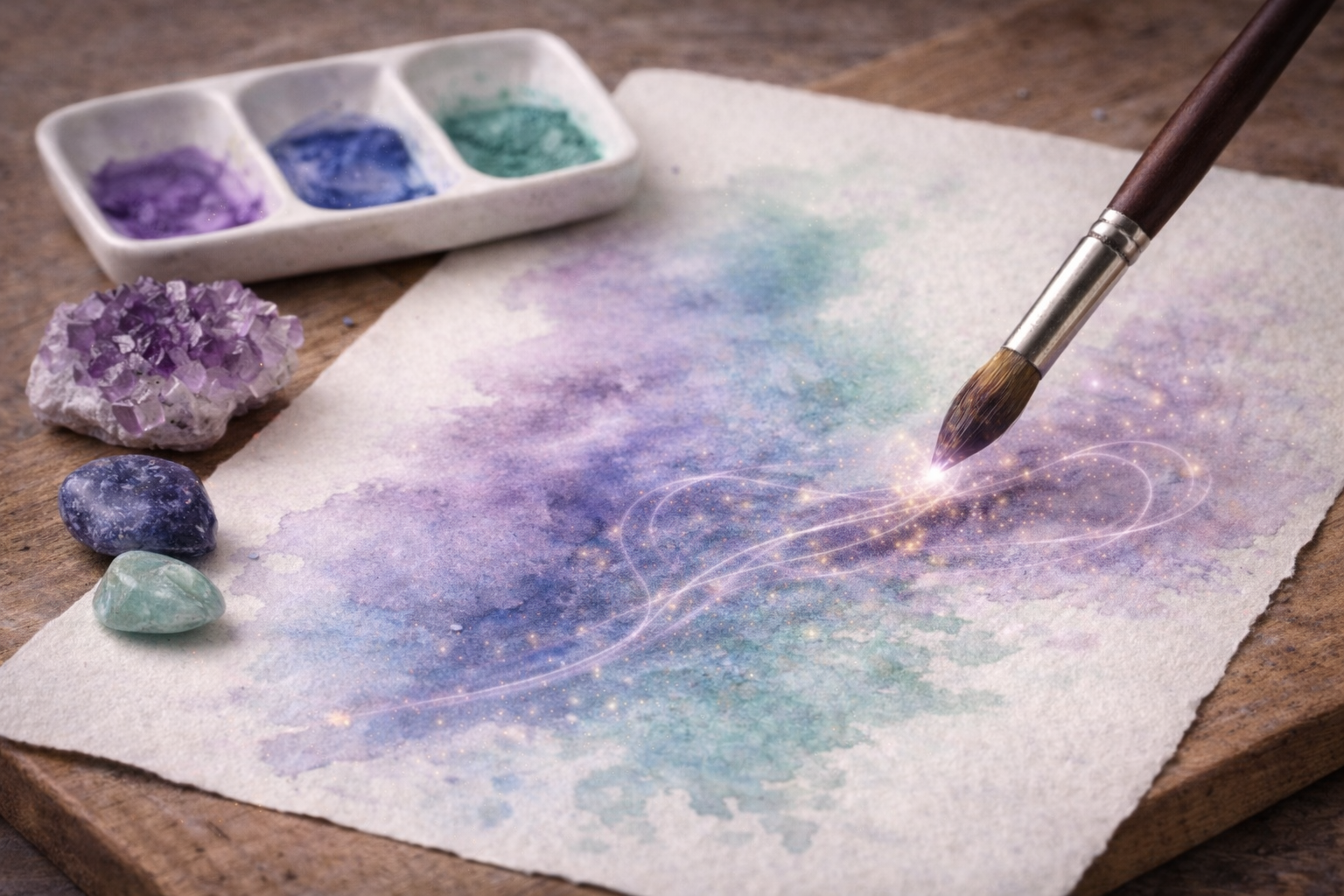
One of my favorite effects so far is layering lapis and azurite.
I start with a soft lapis wash, then while it’s still wet, I sprinkle a small amount of azurite and let it move naturally.
This creates:
- texture
- depth
- organic mineral patterns
It’s never exactly the same twice.
Painting Flow
Each piece follows a simple rhythm:
- base layer → earth pigments
- layering → gradual tone building
- energy layer → azurite or other mineral/crystal powders depending on intention or chakra
- optional accents → lapis, mica, or subtle highlights
Final Thoughts
This approach combines:
- earth
- mineral
- intention
It’s less about perfect color and more about:
depth, movement, and presence.
FAQ
What are natural pigments in painting?
Natural pigments are colors made from earth, minerals, and stones that have been used for thousands of years.
How do you turn pigment powder into paint?
You mix pigment with gum arabic and water to create watercolor paint.
Do I need special materials to use azurite pigment?
No — just gum arabic, water, and basic tools.
Why is azurite different from regular paint?
It creates natural texture and movement because of its mineral structure.
Can beginners use natural pigments?
Yes, it’s a simple process and a great way to start.