
There’s something magical about turning a single rose stem into an entirely new plant. Every time I see fresh leaves appear on a cutting that looked lifeless just a few weeks earlier, it feels like a small gardening miracle.
Over the years I’ve experimented with propagating roses in different ways, and I’ve found that it doesn’t need to be complicated. While there are plenty of detailed methods out there, my best results usually come from healthy stems, a simple potting mix, and a little patience.
As Better Homes & Gardens notes, well-hydrated roses tend to root more successfully from cuttings. I’ve found this to be true in my own garden as well.
When to Take Rose Cuttings
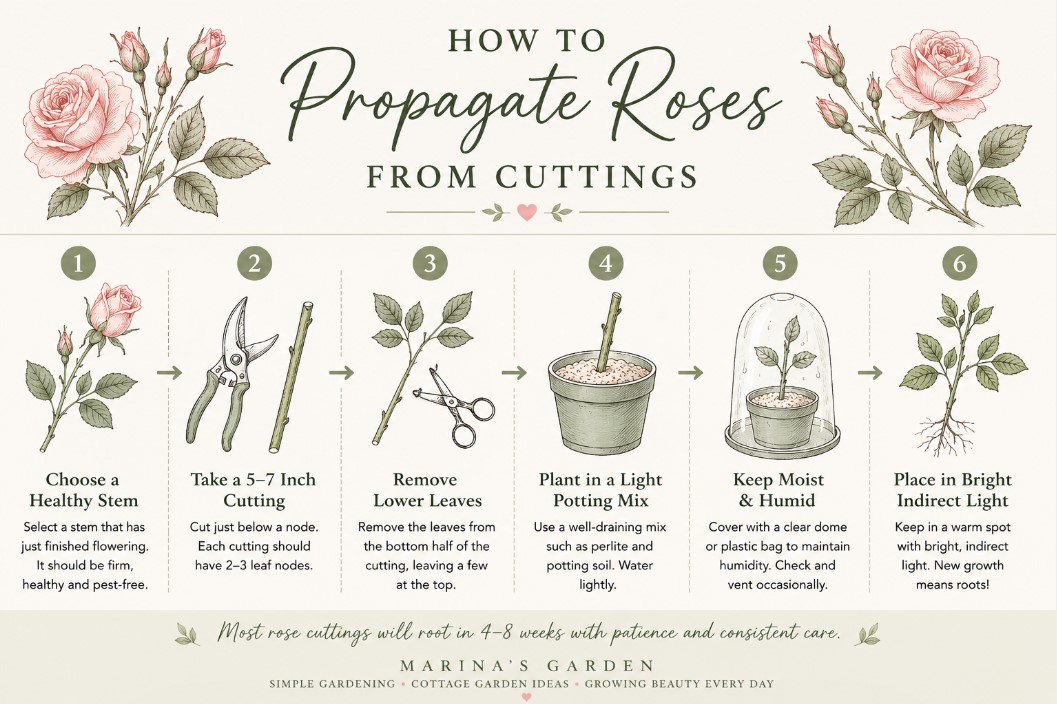
For me, late spring and early summer tend to be the easiest times to root roses. The plants are actively growing, temperatures are mild, and the stems are neither too soft nor too woody.
I usually look for stems that have recently flowered or are just finishing their bloom cycle. These seem to strike a good balance between flexibility and maturity.
Choosing the Right Stem
The only tool I really consider essential is a good pair of sharp bypass pruners. Clean cuts help reduce damage to the stem and make taking rose cuttings much easier.
I prefer stems that are about 5 to 7 inches long and have several leaf nodes. If the stem is extremely soft, it can dry out quickly. If it’s very old and woody, it may take much longer to develop roots.
Using clean pruners, I cut just below a leaf node and remove most of the lower leaves. This helps the cutting focus its energy on root development instead of supporting unnecessary foliage.
My Simple Potting Mix
For beginners, buying a small bag of perlite is one of the easiest ways to improve drainage and increase rooting success. I don’t use anything fancy. A light, well-draining mix works best.
My favourite combination is:
The goal is to create a growing medium that stays lightly moist while still allowing plenty of air around the developing roots.
Do You Need Rooting Hormone?
While I have rooted roses without it, rooting hormone can increase success rates, especially with older stems and more difficult rose varieties.
I’ve successfully rooted roses both with and without it. If you’re just starting out, it’s worth trying both methods and seeing what works best in your own garden.
Creating the Right Humidity
One thing that made a noticeable difference for me was maintaining humidity around the cuttings.
A clear plastic cover, a cut plastic bottle, or a simple propagation dome can help prevent the stems from drying out while roots are forming.
I place my pots in bright, indirect light and avoid direct afternoon sun, which can quickly stress young cuttings.
My Rose Propagation Supplies
How Long Does It Take for Rose Cuttings to Root?
Patience is probably the hardest part.
Some cuttings may show signs of rooting within a few weeks, while others can take a month or two. I try not to disturb them too often. New leaf growth is usually the first encouraging sign that something is happening below the soil surface.
Once the cuttings have developed a healthy root system, I gradually acclimate them to outdoor conditions before moving them into larger containers.
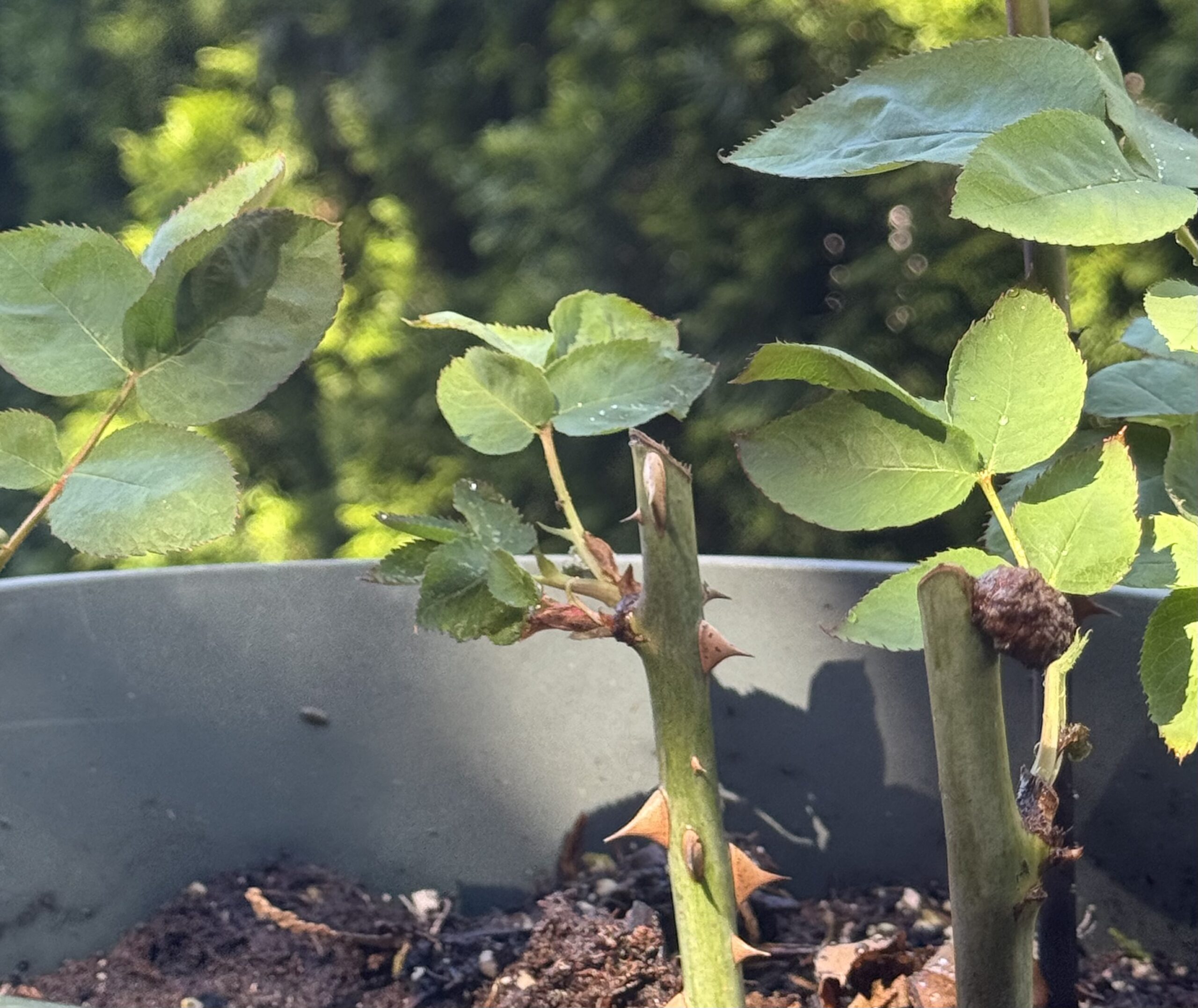
8 Weeks Later: Rose Cutting Update
Eight weeks after taking these cuttings, several are still alive and producing new growth. Not every cutting survived, but a few continue to look healthy and promising. While new leaves don’t guarantee roots, it’s an encouraging sign that the cuttings are still actively growing.
Common Mistakes Beginners Make
Most failed rose cuttings can be traced back to a few common issues:
- Letting the cutting dry out
- Keeping the soil too wet
- Using unhealthy stems
- Placing cuttings in direct sun
- Checking for roots too frequently
Gardening always involves a bit of trial and error, and rose propagation is no exception.
Final Thoughts
One of the things I love most about gardening is the ability to create new plants from the ones we already have. Propagating roses is inexpensive, rewarding, and surprisingly simple once you get the hang of it.
Not every cutting will succeed, but that’s part of the process. Sometimes the roses that seem least likely to root end up becoming the strongest plants of all.
Have you tried propagating roses from cuttings? I’d love to hear what worked for you.