I wanted to keep this part simple.
At first, mixing pigment felt like something complicated or technical, but once I actually tried it, it turned out to be very straightforward.
You don’t need many materials — just a few basics and a bit of experimenting.
Why Mix Your Own Pigment?
Working with raw pigment changes how paint behaves.
It feels less controlled, but more natural.
The color has more depth, and the texture becomes part of the painting instead of something you try to hide.
Nothing looks flat or artificial.
What You Need
You don’t need much to get started.
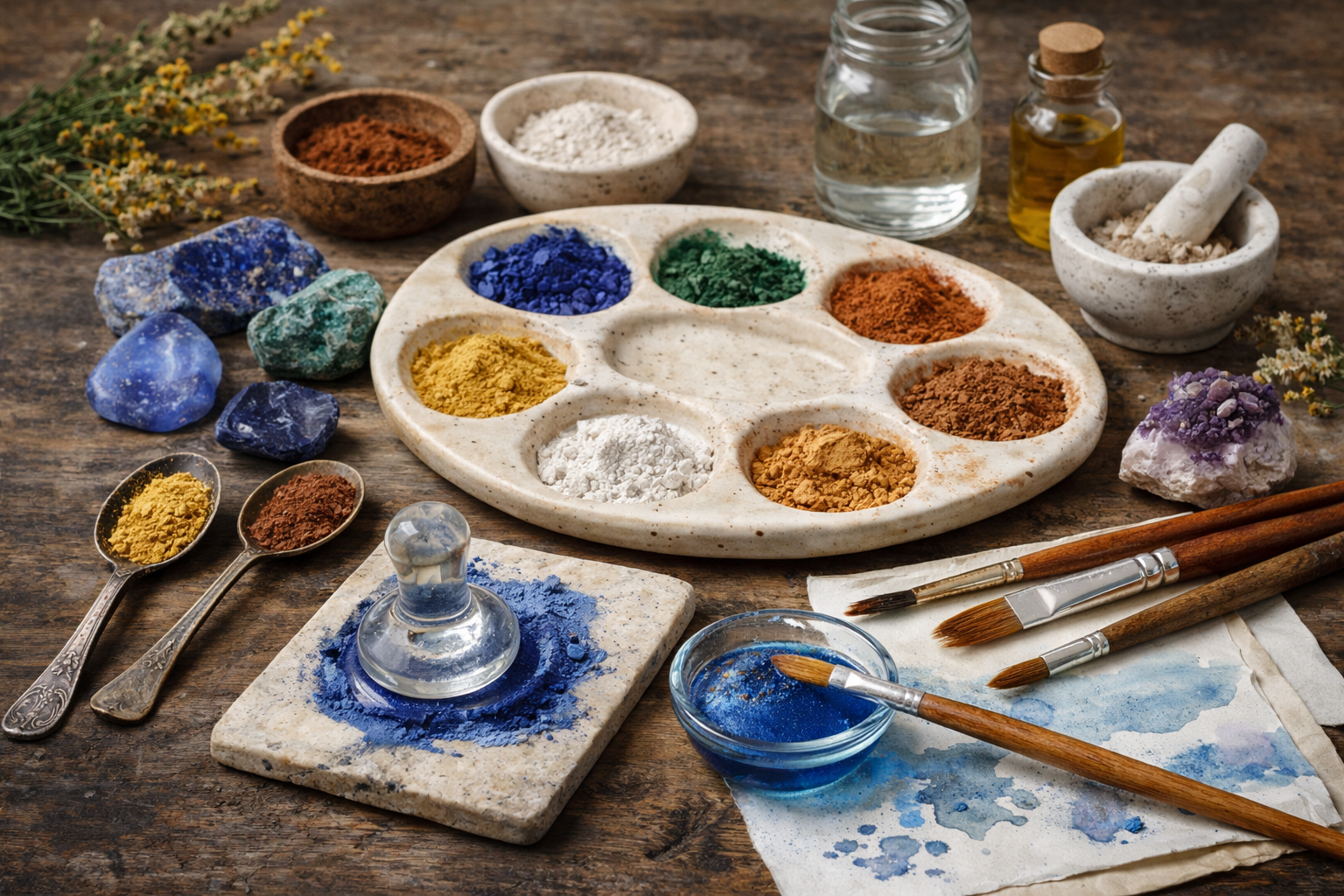
- natural pigment (like azurite or earth pigments)
- gum arabic (liquid)
- water
- brush
Paper (Important)
Paper makes a big difference in how pigment settles and dries.
I keep it simple and just look for three things:
- 100% cotton
- 300 gsm
- cold press
That’s enough — no need to overthink brands.
If you’re searching online:
- “100% cotton watercolor paper 300gsm cold press”
- “deckle edge cotton watercolor paper”
You can add your Amazon link here later.
For smaller sizes like 5×7, you can cut sheets or use deckle paper.
For 8×10, standard watercolor pads work well.
Gum Arabic
This is what turns pigment into paint.
It helps the pigment bind to the paper so it doesn’t just sit on the surface.
Liquid gum arabic is the easiest option to use.
(You can add your Amazon link here later.)
Simple Pigment Mixing
The process is simple:
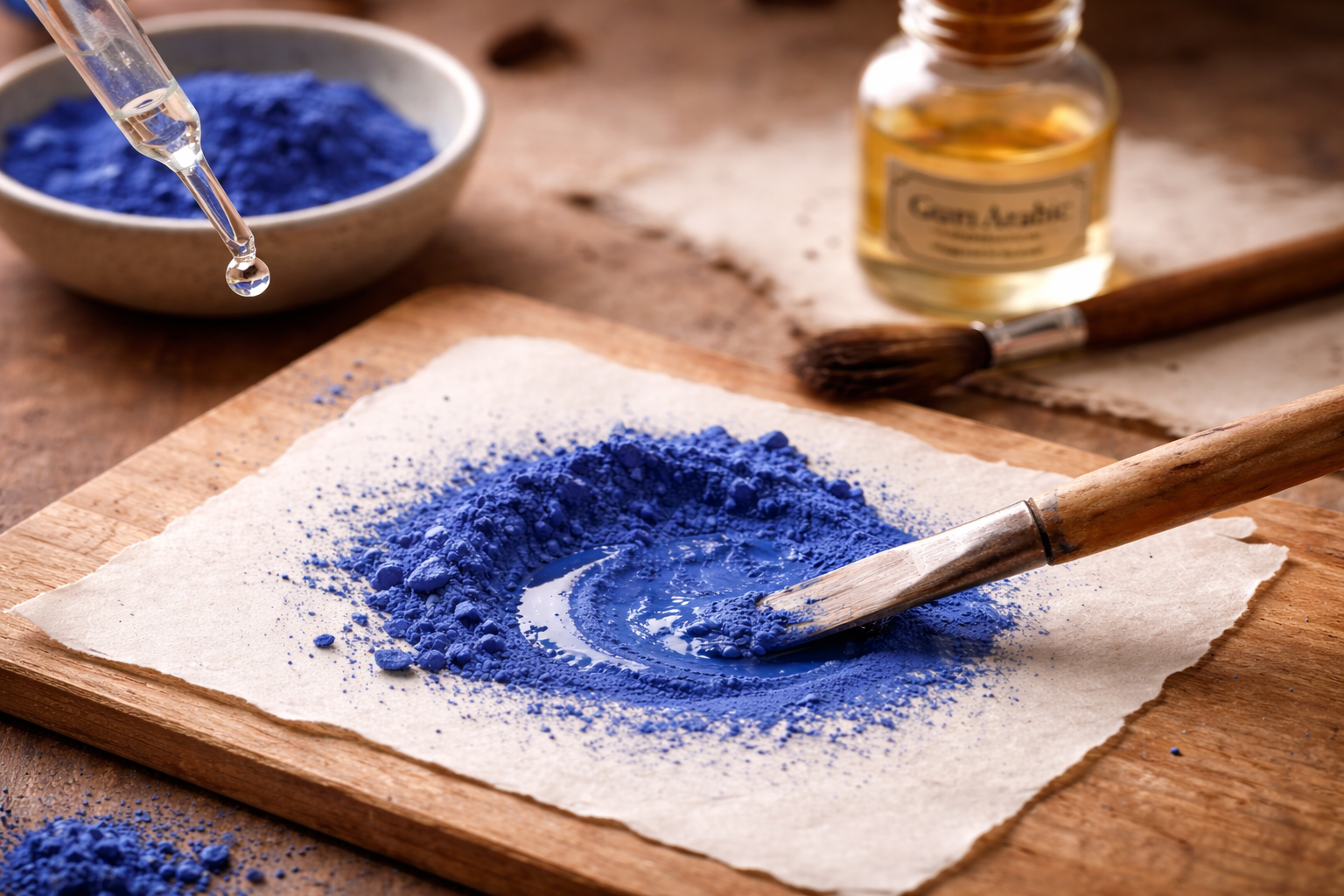
- Place a small amount of pigment
- Add a few drops of gum arabic
- Add water
- Mix until smooth
That’s it — you now have watercolor paint.
How It Should Feel
The mix should feel smooth and slightly fluid.
If it’s too dry, add a bit more water.
If the color feels too light, add a little more pigment.
You don’t need to measure — just adjust as you go.
Working with Mineral Pigments
Some pigments behave differently.
Azurite, for example, is a bit heavier and naturally creates texture as it settles.
Instead of trying to control it too much, I let it move on its own.
That’s where the most interesting effects come from.
Simple Technique
A very easy way to start:
- apply a light wash
- drop in slightly thicker pigment
- let it move naturally
You don’t need to control everything — the pigment will create its own patterns.
Final Thoughts
Mixing your own pigment simplifies painting in a different way.
Fewer materials, but more attention.
It becomes less about precision and more about:
flow, texture, and natural movement.
FAQ
What do you need to make watercolor from pigment?
You need pigment, gum arabic, water, and basic painting tools.
Is gum arabic necessary?
Yes, it helps bind the pigment so it stays on the paper.
Do I need expensive paper?
No — just make sure it is 100% cotton, 300 gsm, cold pressed.
Can beginners mix their own pigments?
Yes, it’s a simple process and a good way to start.
Why does natural pigment behave differently?
Because it’s not synthetic — it creates texture, variation, and movement.
One thought on “How to Make Watercolor Paint from Natural Pigment”