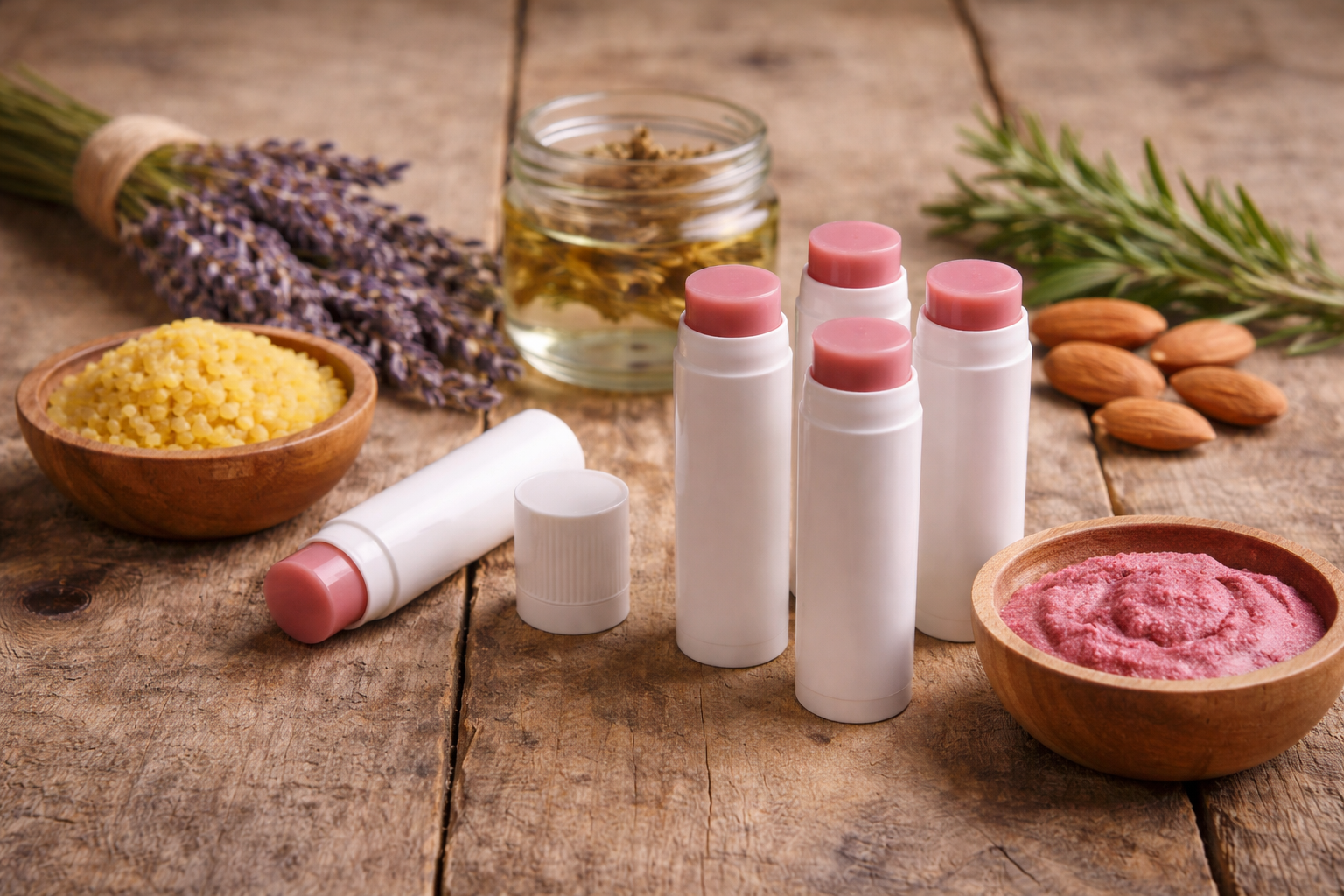
I’ve been making my own lip balms for a while using simple natural ingredients like beeswax, coconut oil, shea butter, and essential oils. The recipe worked well, but I noticed something frustrating — my lips would feel soft right after applying the balm, but then they would become dry again fairly quickly.
After experimenting with different oils and adjusting the formula, I realized the issue was mostly the balance of oils. Some oils absorb quickly and don’t stay on the lips long enough to protect them.
One ingredient that made a noticeable difference for me was castor oil.
Castor oil is thicker than most carrier oils and creates a protective layer on the lips. It also gives the balm a smoother texture and a slight natural gloss. Many lip products use it for exactly this reason.
I also wanted to add a soft natural tint, so I experimented with a small amount of pink mineral powder. The result was a balm that feels more nourishing and gives a subtle rosy color.
A moisturizing homemade lip balm can be made with beeswax, castor oil, nourishing carrier oils, and natural mineral pigment for tint. Castor oil helps the balm stay on the lips longer and prevents dryness.
My Current Tinted Lip Balm Recipe
This recipe makes about 10–12 lip balm tubes.
Ingredients
- 1 tablespoon beeswax pellets
- 2 teaspoons castor oil
- 2 teaspoons sweet almond oil or jojoba oil
- 1 teaspoon shea butter
- ⅛–¼ teaspoon pink mineral powder
- 3–4 drops peppermint essential oil
Optional scent additions
- 1 drop rose essential oil
- or 1 drop neroli essential oil
How I Make It
Step 1 – Mix the color
Mineral powders don’t mix well if they’re added directly into melted oils, so I first make a paste.
I put the pink mineral powder into a small cup, then add about ½ teaspoon castor oil and mix it until it becomes smooth. This helps prevent clumps later.
Step 2 – Melt the oils and wax
Using a double boiler (or a bowl over hot water), I melt:
- beeswax
- castor oil
- almond or jojoba oil
- shea butter
I stir until everything is fully melted and blended.
Step 3 – Add the tint and scent
After removing the mixture from heat, I stir in:
- the mineral pigment paste
- the essential oils
Step 4 – Pour and cool
Finally, I pour the mixture into lip balm tubes or small tins and let them cool completely.
They usually set within about 30 minutes.
What I Like About This Version
Compared to my earlier recipe, this one:
- stays on the lips longer
- feels smoother and more moisturizing
- gives a subtle natural pink tint
- has a soft minty scent
The addition of castor oil really improved the texture and staying power of the balm.
It’s still simple and natural, but it feels closer to commercial lip balms like those from Burt’s Bees, while using ingredients I already have at home.
Final Thoughts
Making lip balm is one of those small DIY projects where tiny adjustments can make a big difference. Changing the balance of oils and adding a small amount of castor oil completely improved how the balm performs for me.
Now I always keep a few tubes around — one in my bag, one by my bed, and one in the kitchen.
If you enjoy natural skincare and homemade cosmetics, you can also explore more recipes and beauty ideas on my Beauty Garden page.
FAQ Section
Why does homemade lip balm sometimes make lips feel dry?
Some DIY lip balm recipes contain too many light oils that absorb quickly and do not create a protective barrier. Adding ingredients like beeswax and castor oil helps seal moisture and keeps lips hydrated longer.
Can mineral powder be used to tint lip balm?
Yes. Mineral pigments can safely tint lip balm when properly dispersed in oil. Mixing the powder with castor oil before adding it to melted balm helps prevent clumps and gives a smooth color.
What oil is best for moisturizing lip balm?
Castor oil is one of the best oils for lip balm because it is thicker than most carrier oils and creates a protective layer that helps prevent moisture loss.
How long does homemade lip balm last?
Most homemade lip balms last between 6 and 12 months if stored in a cool, dry place and made with fresh oils.
